Shocking GPT Image 2 Reveal: Full-Spectrum Core Capability Review and Advanced Guide to the Mysterious duct-type-2 Model
💡 Article Summary: How powerful is the mysterious AI drawing model GPT Image 2 (codename duct-type-2) that has taken the internet by storm? This article provides an in-depth review of the core cards held by this suspected new-generation OpenAI image generation model, covering Chinese text rendering, realistic lighting physics, high-fidelity UI interface generation, and character consistency. Get ahead of the curve with GPT Image 2's prompt typesetting guide and see how it transforms AI from a "visual toy" into "productive infrastructure."
📑 Table of Contents (click to jump)
- ▍ Introduction: What Is GPT Image 2? Why Is Everyone Looking for duct-type-2?
- ▍ 01 Text Rendering and Extreme Typesetting: GPT Image 2 Perfectly Conquers Mixed Chinese-English Layouts
- ▍ 02 Real-World Physics and Lighting: Completely Freeing AI Art from the "Plastic Filter Look"
- ▍ 03 UI Interface and Interaction Reconstruction: The "High-Fidelity" Cheat Tool for Product Managers and Designers
- ▍ 04 Character Consistency and Secondary Editing: Goodbye to Blind Box Drawing and "One-Shot" Assets
- ▍ Conclusion: Welcome the GPT Image 2 Era and Treat AI as Your Own Dedicated Designer
▍ Introduction: What Is GPT Image 2? Why Is Everyone Looking for duct-type-2?
Recently, the AIGC tech community in China and abroad, along with Twitter/X timelines, has been completely flooded by the keyword GPT Image 2. It all started when many developers, during anonymous battles on the LMSYS Chatbot Arena, spotted a mysterious image generation model codenamed duct-type-2.
Although the stable version in OpenAI's official documentation is still the previous generation (Image 1.5), judging by recent gray-scale tests and community-leaked outputs, this new model — widely believed to be GPT Image 2 — delivers a dimension-crushing leap. It's no longer just "can draw pictures"; it truly begins to "understand design and typography."
In the past, AI image tools would produce garbled text the moment you added a little text, and layouts would collapse as soon as they got complex. To verify GPT Image 2's real productivity, I used extreme prompts previously used to stress-test other top-tier AI models and put this suspected new-generation OpenAI model through a full-spectrum "interrogation." The results show that with GPT Image 2, our approach to writing Prompts needs to be upgraded from purely "describing the picture" to professionally "issuing requirement documents (Tasks)".
Below is a hardcore review and image-generation guide across GPT Image 2's four core dimensions.
▍ 01 Text Rendering and Extreme Typesetting: GPT Image 2 Perfectly Conquers Mixed Chinese-English Layouts
When judging whether an AI image model is strong, the first step is not to test grand scenes, but to test the details that challenge logic most: mixed Chinese-English layout, small subtitle text, and multi-module layouts. When handling complex Chinese commercial infographics, GPT Image 2 demonstrates astonishing typesetting logic — it understands the aesthetics of whitespace, and can even automatically match sophisticated thin serif or sans-serif typefaces based on the product's nature (such as skincare or new-style tea drinks).
Test dimensions: the hierarchy of images and text in a commercial poster, accuracy of numbers/prices, and the commercial beauty of the layout.
Image generation prompt (Prompt):
"Please design a 3:4 vertical tea-drink poster for the brand '1点點 (1 Dian Dian)'. Overall style: fresh and natural, youthful and energetic, minimalist and approachable. The main subject is a good-looking jasmine milk green tea (clean tea color, silky texture, paired with the brand's classic transparent cup). The poster must accurately display the following text: '1点點', 'Jasmine Milk Green Tea', 'Popular Recommendation Medium 16 yuan Large 19 yuan'. The poster should have a clear promotional-information hierarchy, with special emphasis on testing small text, numbers, and the beauty of Chinese typefaces, while preserving brand recognition — don't make it look like a cheap e-commerce poster."

🎯 Review result: Crisp text with zero errors, clear price hierarchy, and an overall layout that can be delivered directly as a commercial first draft. GPT Image 2's text generation capability ranks at the current industry's T0 level.
▍ 02 Real-World Physics and Lighting: Completely Freeing AI Art from the "Plastic Filter Look"
Generating beautiful AI portraits has long ceased to be difficult; the real technical barrier lies in producing documentary-style photos without an "AI plastic flavor." GPT Image 2 reaches an extremely high documentary photography standard when handling complex mixed light sources (such as alternating warm and cool light in a mall) and natural human imperfections (such as oily skin, wind-tangled hair, and candid expressions that don't look at the camera).
Test dimensions: complex multi-light-source mixing, physical material reflections (glass/floor tiles), and natural, lifelike human expressions.
Image generation prompt (Prompt):
"Generate an extremely realistic documentary photograph taken in a shopping mall: at the escalator entrance of a large mall on a weekend evening. A 30-something Asian man has just stepped off the up escalator, holding a shopping bag in his left hand and looking down at his phone replying to messages with his right. His hair is slightly messy and his face shows a bit of oiliness. The mall lighting is complex mixed light — warm white overhead lights and cool white window display lights coexist, and the floor is highly reflective tile. The shot should look like a real moment captured by a photographer, not a posed fashion shot."

🎯 Review result: It perfectly reproduced the complex on-site physical lighting, and the skin texture and natural imperfections of the subject are extremely lifelike, breaking the "beautifying soft-focus filter" that previous AI drawing models forced on everything.
▍ 03 UI Interface and Interaction Reconstruction: The "High-Fidelity" Cheat Tool for Product Managers and Designers
This is the core highlight where GPT Image 2 is most stunning and pulls ahead of competitors: it deeply understands UI interaction and frontend structural logic. Not only can it accurately reproduce the phone status bar, search box, and bottom tab navigation, but it can also render two-column waterfall feeds like "Recommended for You," price comparison layouts showing current vs. original price, all with extreme realism — it even autonomously generates matching copyrighted album covers in interfaces like music players.
Test dimensions: mobile app component structure, reasonableness of image-text mixed layouts, and modern commercial design aesthetics.
Image generation prompt (Prompt):
"Generate a high-fidelity screenshot of a mobile e-commerce app home page. The top has a status bar showing the time 9:41, with a search box below. The main content includes a 10-grid function area (such as Billion Subsidy, Flash Sales). The middle section is a limited-time flash-sale module with a countdown. Below is a two-column 'Recommended for You' product waterfall including product images, titles, and prices. At the bottom is a fixed Tab Bar with 'Home' highlighted. All Chinese text must be clear and readable, and the overall result must make people feel at first glance that it's a real product interface."
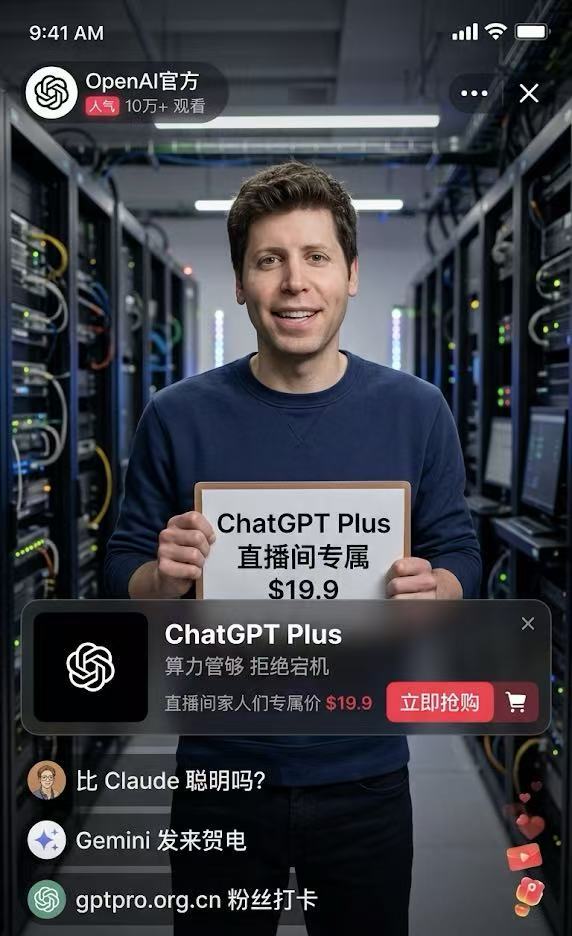
🎯 Review result: It achieved near-pixel-perfect alignment of component-library layouts. For UI/UX designers and product managers, GPT Image 2 is absolutely a terrifying prototyping efficiency tool.
▍ 04 Character Consistency and Secondary Editing: Goodbye to Blind Box Drawing and "One-Shot" Assets
For illustrators and content creators, maintaining character traits or art-style consistency has always been a pain point of AI drawing roulette. In GPT Image 2, whether it's showing the same anime character in 16 different expressions, or dressing up your pet in various uniforms while keeping its patterns consistent, the new model duct-type-2 performs with remarkable stability.
Test dimensions: preservation of core character traits (face shape/hairstyle/eye color/clothing), grid layout, and localized control ability.
Image generation prompt (Prompt):
"Generate a sixteen-grid expression chart of a 2D anime girl with silver long hair and blue eyes. Her face shape, hairstyle, and outfit must stay highly consistent across all cells. The sixteen expressions must include: happy, sad, angry, surprised, crying, heart eyes, etc. The grid divisions must be clearly defined."
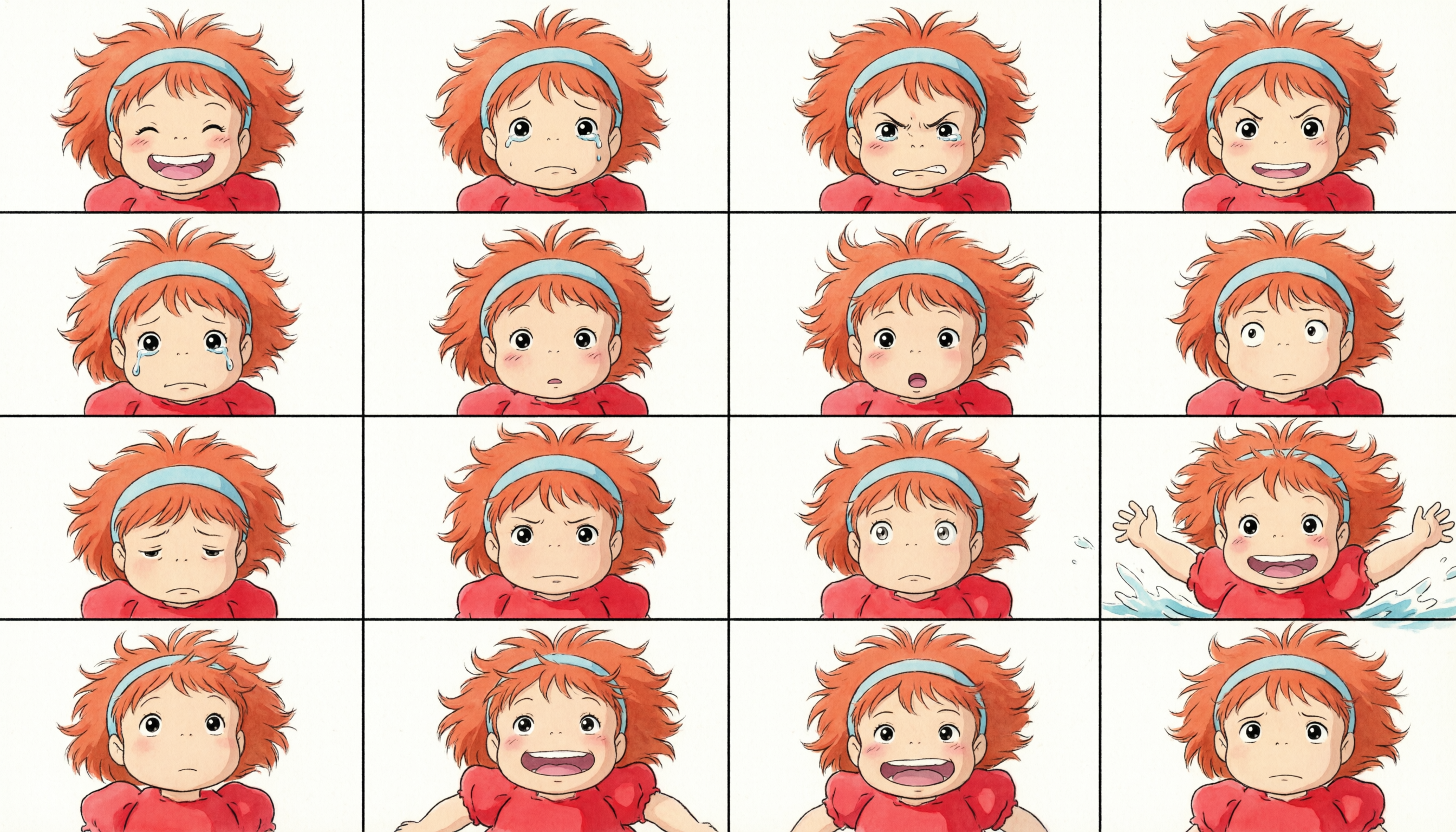
🎯 Review result: Creators are completely freed from the "blind box drawing era." The ability to lock character traits and understand context under the same Prompt has received an epic-level boost.
▍ Conclusion: Welcome the GPT Image 2 Era and Turn AI into a Productivity Designer
As the stunning debut of duct-type-2 shows, once an AI image model can flawlessly follow complex instructions, render dozens of Chinese characters without error, and automatically complete beautiful typesetting, it has crossed over from a mere "visual toy" into true "productive infrastructure."
In the upcoming full GPT Image 2 era, we need to shift our mindset: when using AI, give it "requirement documents (PRDs)" just as you would to a human outsourced designer, rather than simply stacking flowery adjectives. This leap in the AI ecosystem will not only generate enormous search engine buzz, but is also rapidly restructuring how we create digital assets — genuinely lowering the creative and design threshold for everyone.